
Services · Memory Care
Dementia Home Care Services, Built Around the Person They Still Are
Home dementia care lets your mom or dad stay in the house they know, with a caregiver trained for memory loss who keeps each day calm, safe and familiar. We're a family-owned agency in Redondo Beach, and for more than 30 years we've cared for people living with Alzheimer's disease and other dementias across Los Angeles County, by the hour, around the clock, or with a live-in caregiver.
If you're reading this after a new diagnosis, or after a scary week, take a breath. You don't have to have it all figured out before you call.
Tell us what's changed with your loved one, and we'll send a free written quote.

What does dementia care at home include?
Dementia care at home is everyday help, given in a way that makes sense to someone whose memory is changing. Our caregivers build the day around what your loved one already knows: the same routine, the same faces, the same small comforts.
- A care plan written around lifelong habits, likes and dislikes
- A steady daily routine that cuts down on confusion and agitation
- Gentle redirection instead of correcting or arguing
- Assistance with bathing, dressing, toileting and eating, at whatever level is needed
- Meal preparation, including diets for things like diabetes
- Medication reminders, and keeping an eye on how much they're drinking
- A home safety check: wandering, the stove, stairs, medications
- Extra support in the late afternoon and evening, when sundowning hits
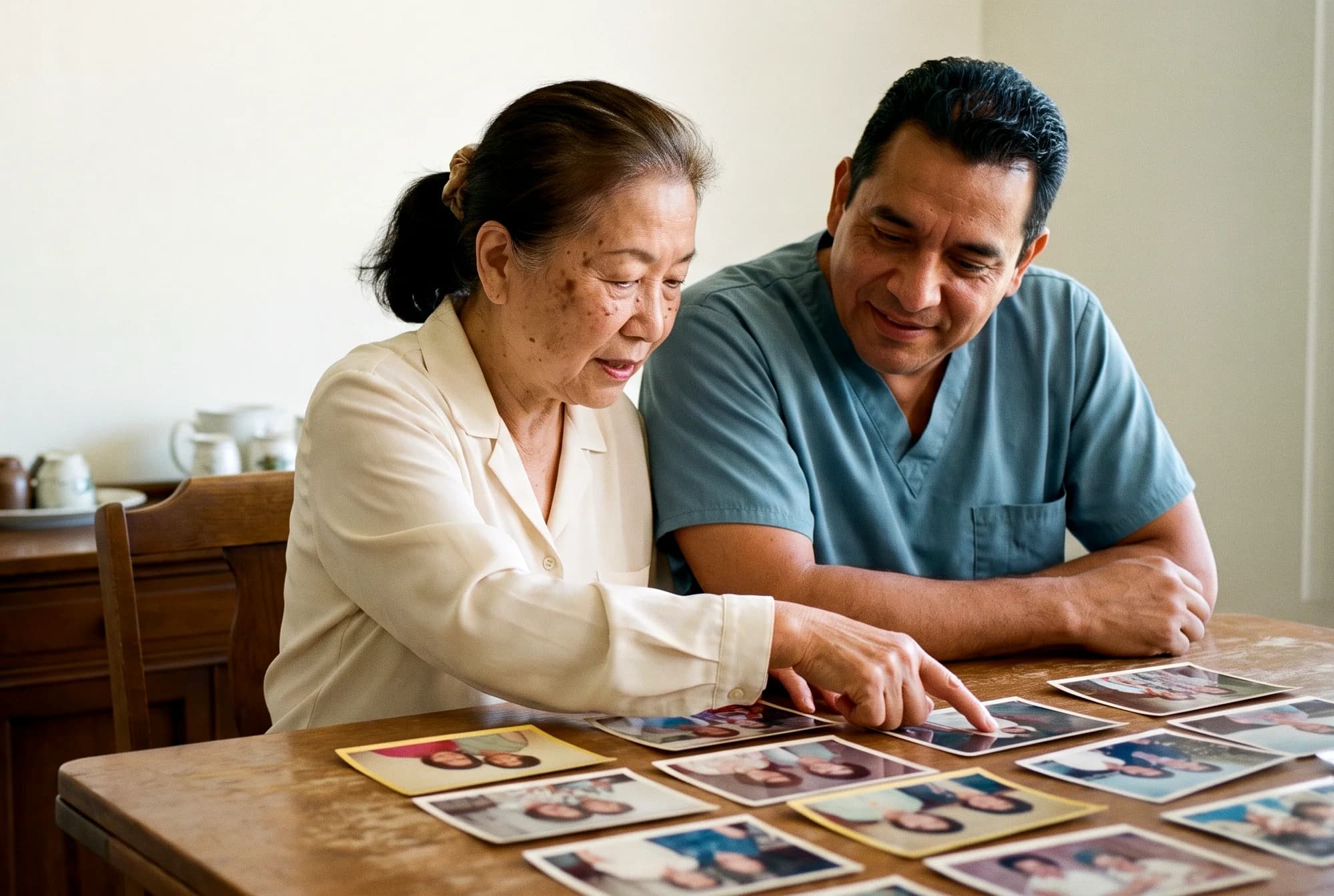
- Meaningful activity: music, photographs, folding laundry, a walk around the block
- Notes on changes over time, so you and the doctor see the full picture
Our care is non-medical, so we don't provide skilled care or medical care. If your loved one has a nurse or therapist coming in, we work alongside them.
Is home dementia care better than a memory care facility?
For many families, in-home care is the better choice, at least for a good while. Memory care communities can be the right answer for some people, especially later on. A familiar house reduces confusion, and one-on-one attention is very different from a facility where staff are shared across many residents. Your mom keeps her own bed, her own kitchen, her own neighbors and friends.
Home isn't right for everyone forever, and we'll be honest with you about that. As the disease progresses, care needs change. If your loved one's needs grow past what's safe at home, we'll tell you, and help you weigh the other care options. Until then, adding hours or moving to 24 hour home care is often what keeps home dementia care workable.
How are your caregivers trained for Alzheimer's care?
Memory care assignments go only to caregivers with specialized training and real experience in dementia and Alzheimer's care. Every one of our caregivers is a state-registered home care aide with at least two years of verified experience, fingerprinted and background-checked through the DOJ and FBI. We're a licensed California Home Care Organization (HCO #194700757), bonded and insured.
Caregiver training is only half of it. We match on temperament, too. A patient, unhurried caregiver who loves old music can do more for a hard afternoon than any technique. Not all home care providers work this way, so it's a fair question to ask anyone you're considering. If the fit isn't right, tell us and we'll change it.
How does care change as Alzheimer's progresses?
Alzheimer's disease and most other dementias change slowly, and the help your loved one needs changes with them. We adjust the care plan as you go, so you're never paying for more than you need or getting less than is safe.
- Early stage. A few hours a week. Reminders, meals, a tidy house, and someone who notices when something's off. Many people living with early dementia mostly want company and a little backup.
- Middle stage. More hands-on help with daily activities like bathing and dressing, plus closer supervision. This is often when sundowning and wandering start, and when families add evening or overnight hours.
- Later stage. Help with nearly all activities of daily living, and often round-the-clock care. Many families choose live-in care or awake shifts here, sometimes alongside hospice.
It's hard to know what to expect, and every person is different. We'll talk honestly about what we're seeing at each visit, so you can plan instead of react.
What are the signs someone with dementia needs help at home?
These are the moments that usually lead family members to call:
- 01Repeated questions and lost items. In the early stage of Alzheimer's or another dementia, memory loss is easier to support before a crisis forces the decision.
- 02Leaving the house alone. Wandering is the most urgent reason families call us.
- 03Missed meals or medications. The fridge is full, or empty, and the pill box hasn't moved. It's getting hard to manage the day alone.
- 04Evenings are getting harder. Restlessness, fear or anger as the light goes.
- 05They won't accept help from family. A trained caregiver is often welcomed where a son or daughter isn't.
- 06You're running on empty. You've started to miss work, you're not sleeping, and the stress is showing.
If one of these has been true for a while, you don't need to wait for something worse to happen.
Not sure how much help your loved one needs? Talk it through with us. A real person answers 24/7.
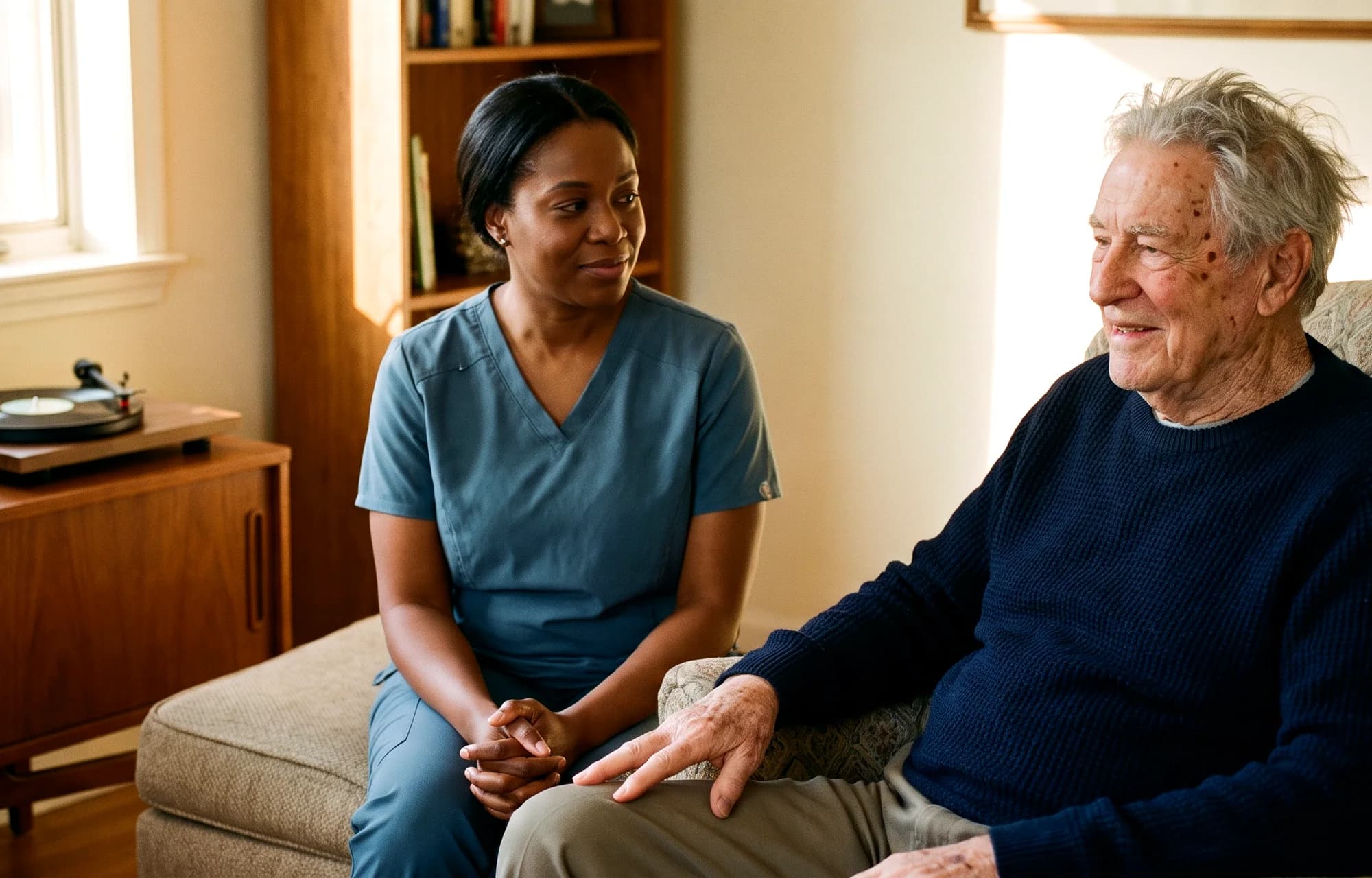
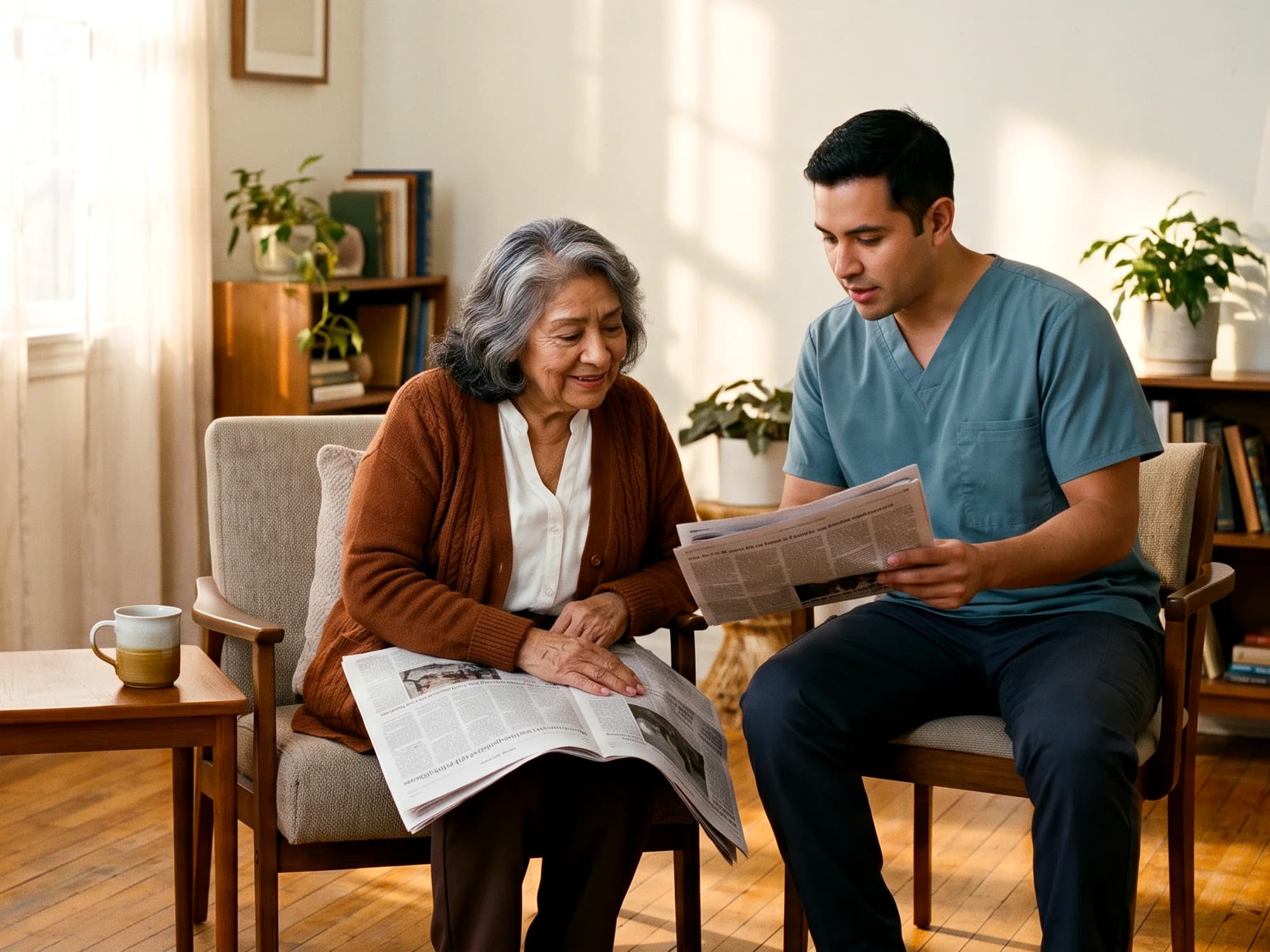
Familiar ground
Routine, photographs, music: the things that anchor a day.
How do caregivers handle sundowning, wandering and agitation?
Agitation almost always has a cause: pain, hunger, a full bladder, a noisy room, or just being tired. Our caregivers look for that cause first, then calm things down with a quieter space, a familiar song, a snack or a short walk. They don't argue with a memory that isn't quite right. They meet your loved one where they are.
For sundowning, we keep afternoons calm and predictable, with lights on before dark and dinner on time. For wandering, we set up the house safely and stay close. If something changes, such as a new behavior or a fall, we let the family and the physician know quickly.
What does dementia care at home cost, and who pays?
We don't publish our rates, because hours and needs vary so much. Traditionally, a non-medical caregiver in California has cost about $40 an hour, the state median in CareScout's 2025 Cost of Care Survey. In-home care for dementia sometimes calls for a more experienced caregiver, and round-the-clock coverage costs more than a few hours a day. Home care costs depend mostly on hours, so we'll help you determine how much help your loved one really needs right now.
We typically quote lower than traditional market rates, and after an in-home assessment you'll get a written quote with no long-term contract.
Medicare doesn't pay for ongoing non-medical home care, so in most cases families pay privately. Long-term care insurance and VA benefits for an eligible veteran can help with the costs, and if your loved one qualifies for Medi-Cal, the state's In-Home Supportive Services (IHSS) program may cover some hours. Our guide to in-home care costs in Torrance and the South Bay walks through the numbers in more detail.
What should you ask a dementia home care agency?
Whoever you call, us or someone else, these questions will tell you a lot:
- Are your caregivers trained in dementia care, and how much experience do they have with it?
- Is the agency licensed, bonded and insured?
- Who covers if our regular caregiver is sick? Will it be someone my mom already knows?
- How often do you review and update the care plan?
- Can we meet the caregiver before the first visit?
Your loved one's doctor can be a good sounding board too, and the Alzheimer's Association has guides on choosing care. We're glad to answer every one of these on the first call. Because we keep a small team of two or three caregivers around each client, there's always a familiar backup.
How do we get started?
- 01Call us, any time, or fill out the short form. Tell us what's going on in plain words. No script, no pressure.
- 02Meet in person or over Zoom. Whatever is easiest for your family. Think of it as a free home care consultation.
- 03In-home assessment. We visit, learn your loved one's routine, life story and specific needs, and check the home for safety.
- 04A plan you approve. Then we introduce the caregiver before the first visit, so your mom or dad never opens the door to a stranger.
What support is there for family caregivers?
Caregiving for someone with dementia is one of the hardest things a family does, and you deserve support too. The Alzheimer's Association runs a free 24/7 Helpline at 800-272-3900, and the Alzheimer's Association chapter here offers classes, support groups and other resources for the community. Hospital social workers can also point you to local programs.
When you need a real break, respite care gives you one. Our respite care at home covers an afternoon, a weekend or a week, and our guide to respite care in the South Bay explains how other families set it up. If nights are the hardest part, read about 24 hour home care in Torrance and the South Bay.
Where do you provide dementia care at home?
We care for seniors living with dementia across all of Los Angeles County, with our deepest coverage in the South Bay: Torrance, Redondo Beach, Manhattan Beach, Hermosa Beach, the Palos Verdes Peninsula and El Segundo, as well as Long Beach, Santa Monica and Pasadena.
Questions
Questions families ask about dementia care at home
Can someone with dementia stay at home safely?
Often, yes, with the right support. Many people with dementia or Alzheimer's do well in their own home for years with a consistent caregiver, a safe setup and a steady routine. We'll give you an honest read after the assessment.
Does Medicare cover dementia care at home?
Not the everyday kind. Medicare covers doctor visits, hospital stays and short-term skilled home health care, but it doesn't pay for ongoing non-medical help like supervision, bathing or meals. Hospice, which Medicare does cover, can add support near the end of life, and we work alongside hospice teams.
What if my parent refuses help?
That's very common. We usually start small, with a "friend who helps around the house" or a few hours a week, and let trust build. A trained caregiver is often accepted where a family member isn't.
Do you offer live-in care for dementia?
Yes. We schedule live-in care and awake 24-hour shift care. If your loved one is up and wandering most nights, we'll recommend awake shifts.
What if behavior becomes aggressive?
Agitation usually has a trigger: pain, fatigue, overstimulation. Our caregivers are trained to find it, calm things down, write it down, and loop in the family and the doctor quickly.
Will the same caregiver come every time?
Yes, as much as possible. Familiar faces matter even more with dementia, so we keep a small, steady team around the person you love.
Rather just talk it through?
One short call is usually all it takes to know what fits. No forms, no script.
Call (310) 940-0191Speak to a care advisor
Tell us a little about what's been happening and we'll call you back today.
Other services
Care that often goes alongside
You don't have to figure this out alone
Tell us about your mom or dad: who they've always been, and what's been hard lately. We'll listen, answer honestly, and help you decide what comes next.
Get a free written quote, or call us now. A real person answers 24/7.